Social media trends 2026: The ultimate guide
Are you here because something isn’t working, or do you want to be prepared for next year? Maybe your reach has been stagnating for months. Perhaps your engagement is declining even though you post regularly. Maybe you see your competitors growing while you’re treading water. Or you simply don’t know if what you’re doing is still right and relevant. In all these cases, you should take a look at our social media trends for 2026.
The first piece of good news: You are not alone. 73% of marketing teams report the same problems.
The better news: The solution is known. It’s just different from what you think.
The problem isn’t that you’re not working hard enough. You’re probably working too hard, but using outdated methods. Social media has changed more fundamentally in the last 18 months than in the previous five years. While you focus on follower numbers, your competitors are building communities. While you hope that the algorithm will be kind to you, others are optimising for social search. While you send traffic to your website, others are selling directly on TikTok with 40% higher conversions.
The question is not whether you will adapt. The question is: How quickly?
This guide shows you the 12 key trends for 2026. No theories, just strategies that already work.
Why everything will change in 2026 -The 3 fundamental shifts
The social media landscape is characterised by three key changes. These shifts form the foundation for all operational trends and tactics.
Shift #1: From reach to relevance
The problem:
Follower numbers and viral posts will no longer guarantee success in 2026. The algorithms used by Instagram, TikTok and LinkedIn prioritise engagement quality over pure impressions.
The facts:
- A post with 500 saves, shares and comments performs better than one with 50,000 fleeting views.
- B2B companies with 3,500 followers often generate more qualified leads than accounts with 150,000 followers.
- 42% of users have already set up active content filters.
What this means:
The new currency is moments of contact with real value. Content must answer a specific question, solve a problem or function as a checklist.
Best Practice:
Before posting, ask yourself: ‘Would anyone save this because they need it again later?’ If not, revise the content or discard it.
Shift #2: User-controlled feeds instead of algorithm dependency
What has changed:
Since January 2025, Instagram has enabled the ‘Tune Your Algorithm’ feature. Users can actively exclude topics and content categories.
The consequence:
Your biggest threat is no longer the algorithm, but the conscious decision of users. With two clicks, you are invisible, and permanently so.
The figures:
- 42% of users have already activated content filters
- Passive scrolling is being replaced by active feed curation
- TikTok and other platforms are following this trend
Recommended action:
1. Diversify your topics: Narrow niches make it easier to filter out.
2. Deliver consistent added value: Filler content is actively blocked.
3. Build regular engagement: Platforms ask users, ‘More of this?’ If there is little interaction, the content is sorted out.
The difference:
The algorithm was coincidentally lenient. Users are deliberately selective.
Shift #3: Social media is becoming a complete business ecosystem
The transformation:
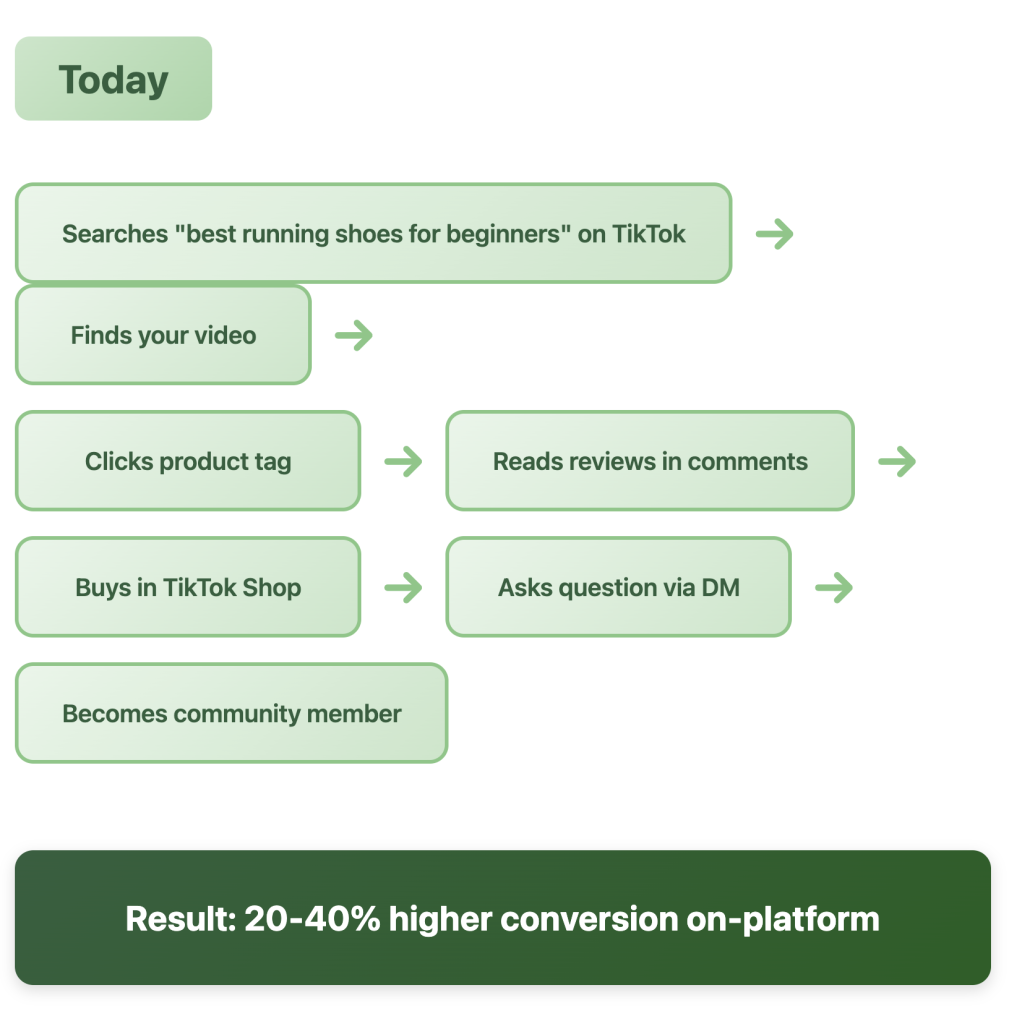
In 2026, social media will no longer be an advertising channel for website traffic, but rather the place where the entire customer journey takes place.
4 phases:
- Discovery – Social search (64% of Gen Z search on TikTok instead of Google)
- Consideration – Content, reviews, community interaction
- Purchase – Social commerce with native checkouts
- Service & loyalty – DMs, community spaces
The 10 essential social media trends for 2026
You now know the three fundamental shifts that will shape social media in 2026. But how do you implement them in practice?
The following 10 trends are your roadmap. Each one builds on the shifts and shows you precisely what works, why it works and how to implement it.
Best of all, you don’t have to implement all 10 trends at once. Pick the 3-5 that best fit your business model.
Trend #1: AI-powered content workflows
Status quo:
- 69% of marketers use AI for content creation
- 72% report better results
- But: Only 23% have implemented systematic workflows
The issue:
Most use AI reactively as an emergency tool rather than proactively as a system. The result is inefficiency despite the use of AI.
The solution: The 4-step workflow
Stage 1: Research & Clustering
AI analyses target group questions from social search, comments and DMs.
→ Tool tip: AnswerThePublic + ChatGPT for topic clustering.
Stage 2: Ideation
Generate 10 hook variants per topic. AI creates script basics with different entry points.
Stage 3: Production
80% AI efficiency (structure, formatting, variants) + 20% human refinement (brand voice, expertise, concrete examples).
Stage 4: Adaptation
One long-form asset becomes 15+ platform-specific posts. OpusClip automatically cuts the best moments from long videos.
The critical balance:
Without the 20% human input, content becomes generic and invisible in the sea of AI slop. Your brand voice, specific examples and genuine expertise make all the difference.
Quick win:
Use AI for topic research this week. Ask ChatGPT: ‘Analyse the 20 most common questions my target audience has about [your topic]’. Use this to create your content pipeline for the next 4 weeks.
Tools:
ChatGPT – Basic workflows, research, idea collection
Jasper – Brand voice training for consistent style
AnswerThePublic – Keyword & question research
Descript – Video editing with AI support
ROI: 60% time savings, 3-5x higher output with the same quality
Trend #2: Social Search Revolution
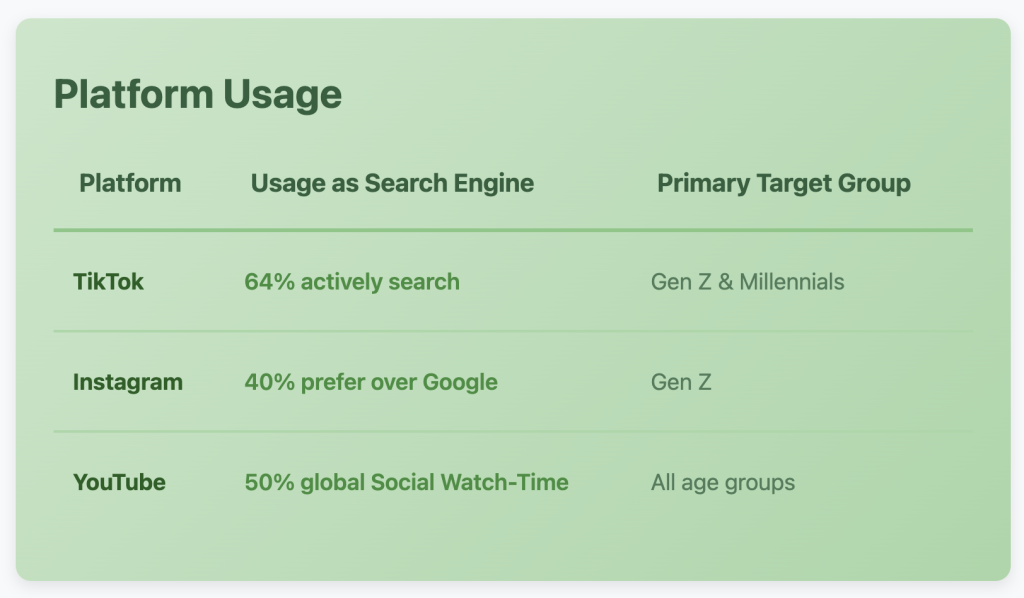
Social media platforms will be the primary search engines for younger target groups in 2026. 64% of Gen Z search on TikTok instead of Google (WARC/Adobe), and 40% prefer Instagram or TikTok over traditional search engines.
What is changing:
Social media platforms now index everything, which means that every video is a potential search result hit for months or years.
- Video-titel
- Captions
- Spoken words (through subtitles, comments and alternative text)
The 5 levers of social SEO optimisation
1. Video title: Place primary keyword prominently.
Example: ‘Social media trends 2026 for B2B marketing | LinkedIn strategy’
2. Caption: Incorporate secondary keywords naturally.
Write as if responding to a search query, not just as a caption.
3. Subtitle: Keyword variants in spoken words
Platforms scan subtitles and index them for search.
4. Hashtags: 3-5 relevant, no spam tags
Hashtags are category markers, not reach hacks.
5. Alt texts: Descriptive keywords for images
Helps with both accessibility and findability.
Quick win:
Rename your last 10 videos. Add clear keywords that your target audience would actually search for. Optimise captions with natural keyword integrations.
Tools:
- AnswerThePublic – Discover what people are really searching for
- TikTok Search Insights – Directly in the app, shows trending searches
- Descript – Automatic subtitles with keyword optimisation
- VidIQ – YouTube keyword tool with search volume
ROI: 3-7x higher findability, sustained traffic instead of one-off reach
Trend #3: Video funnel strategy
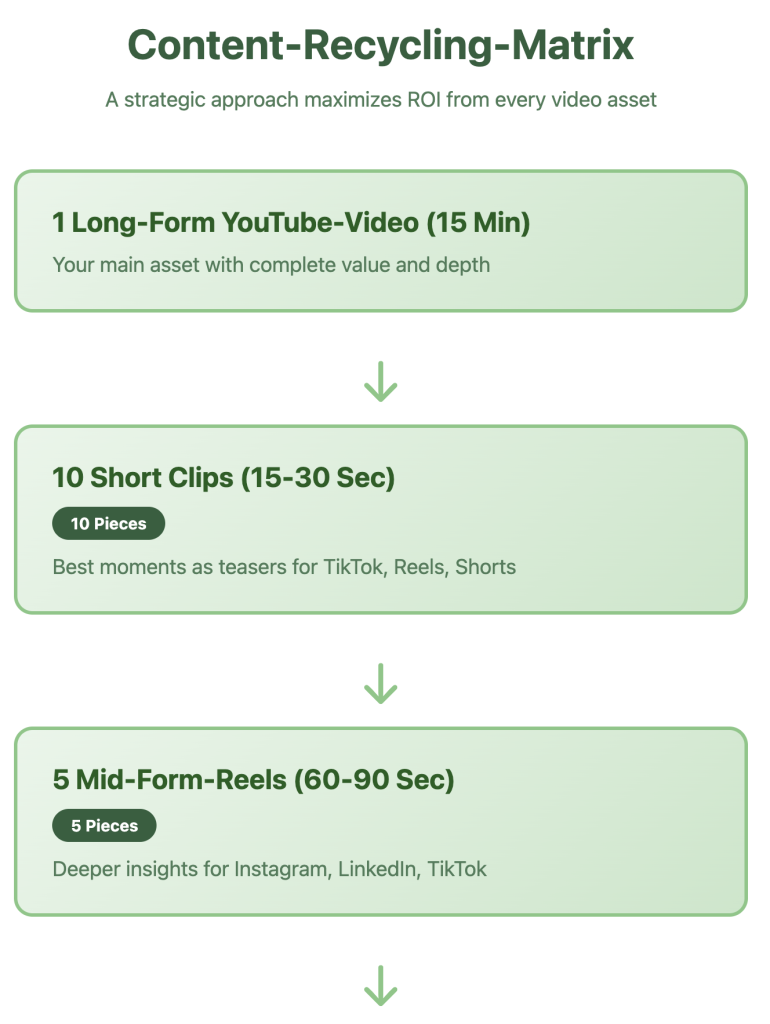
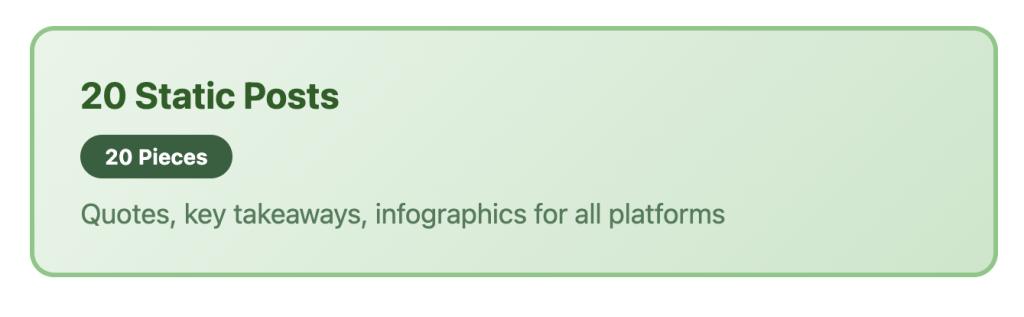
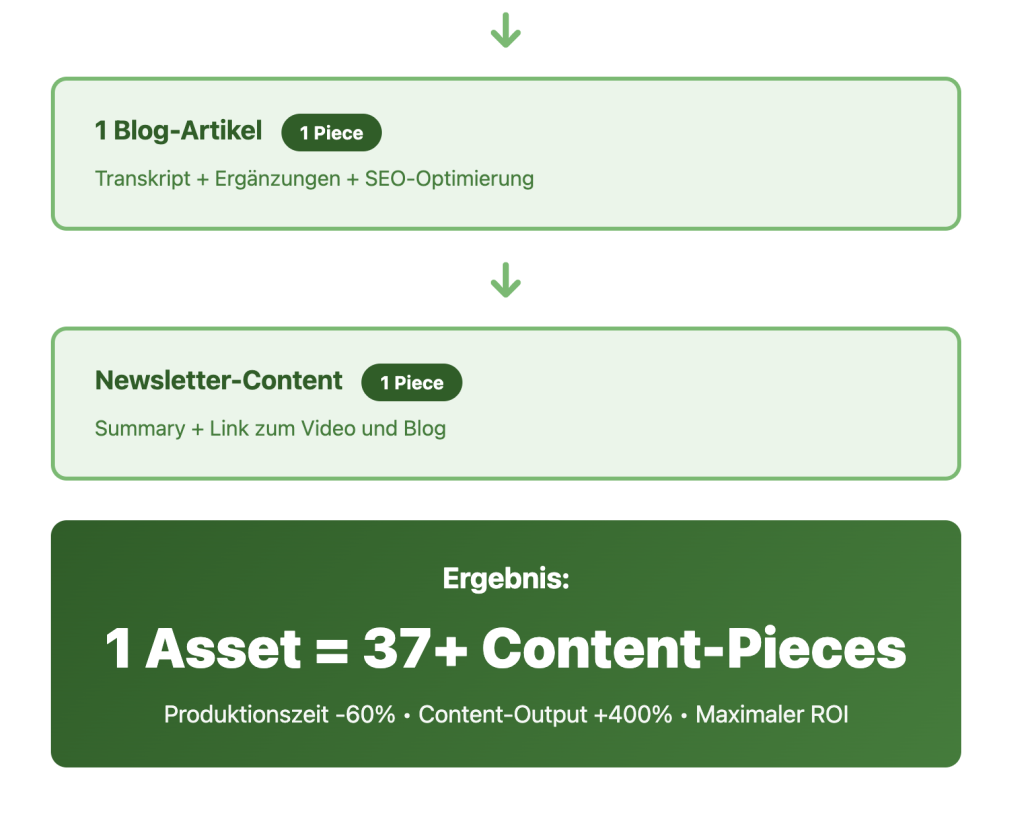
Long-form videos generate 10 times more views and 5 times more meaningful comments than short clips. TikTok now allows videos up to 10 minutes long, while YouTube dominates with 50% of global social watch time.
The critical formula:
A 5-minute video with 35% retention performs better than a 30-second video with 40% retention.
Why? Platforms reward absolute watch time (1.75 min > 0.12 min), not just percentage retention.
Quick win:
Choose your strongest topic. Produce a 10-15 minute video with real depth. Use OpusClip to automatically cut it into 8-10 short clips for the next 2 weeks.
Tools:
- Descript – Transcript-based video editing
- OpusClip – AI auto-clipping from long-form to shorts
- Riverside.fm – High-quality remote interviews
- CapCut – Fast mobile editing for shorts
ROI: Production time -60%, content output +400%
Trend #4: On-Platform Conversion & Social Commerce
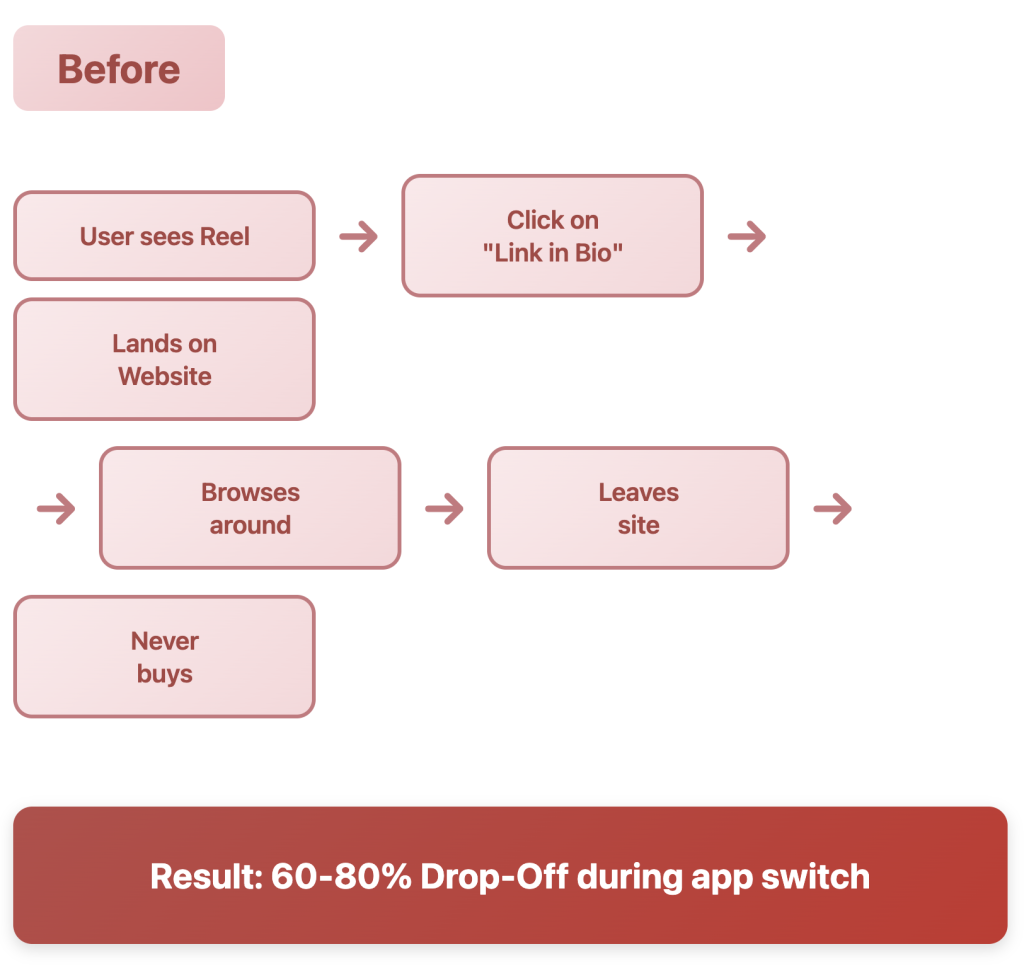
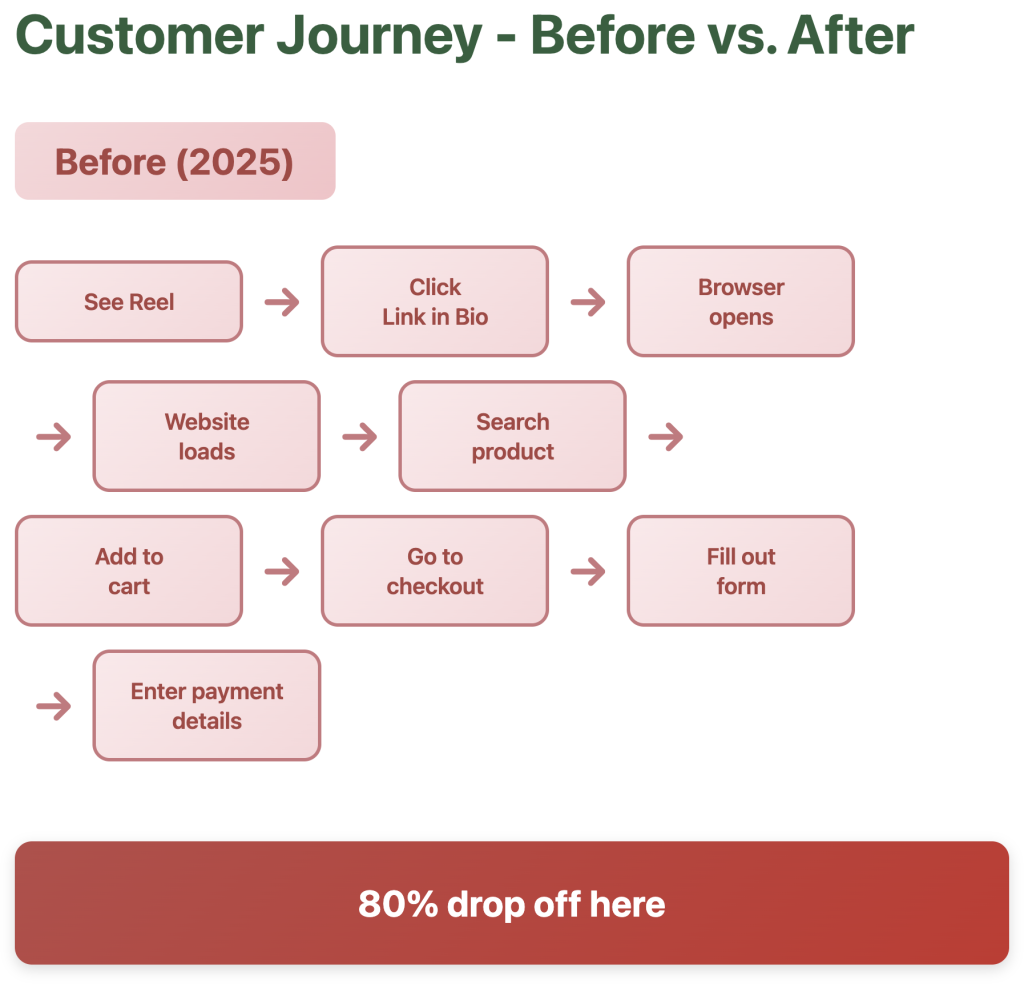
‘Link in bio’ will be dead by 2026. Native checkouts will dominate with measurable advantages.
The facts:
- $100 billion US social commerce revenue in 2026
- 20-40% higher conversion rates for on-platform checkouts vs. external links (Shopify 2025)
- 60-80% user drop-off when switching apps to external websites
Why on-platform is winning:
Every additional click, every app change, every new form is friction. And friction costs conversions. Users don’t want to wait, log in again, or re-enter payment details.
Platform-specific strategies:
Instagram shopping
- Product tags in Reels, posts, stories
- Native Instagram checkout (in-app purchases in seconds)
- Collections for curated shopping experiences
- Live shopping events with direct purchases
TikTok shop
- Creator-driven commerce (affiliate model)
- ‘Shop the Video’ integration – products directly in the feed
- Live shopping with entertainment factor
- Product showcase tab in profile
LinkedIn (B2B Focus)
- Lead generation forms with 3x higher conversion rates than external landing pages.
- Why? Data is pre-filled (name, email, company, position).
- One click instead of a 10-field form.
- Video testimonials with direct demo booking link.
WhatsApp business
- Product catalogues directly in chat
- Personal advice via Messenger
- Payment integration (available in selected markets)
- Automated responses for FAQs

Quick win:
E-commerce: Set up Instagram Shopping or TikTok Shop this week. Tag your 5 bestsellers in your latest posts.
B2B: Create a LinkedIn lead generation form for your main offering. Test it in a campaign this week.
Tools:
- Shopify – Seamless commerce + social integration
- ManyChat – DM automation for sales funnels and follow-ups
- Stripe – Payment processing for social commerce
- Facebook Commerce Manager – Cross-platform shop management
ROI: 20-40% conversion lift, 50% shorter sales cycles, lower acquisition costs.
Trend #5: Micro-communities beat the masses
Last year’s formula has completely changed. 50,000 engaged followers are more valuable than 500,000 passive viewers.

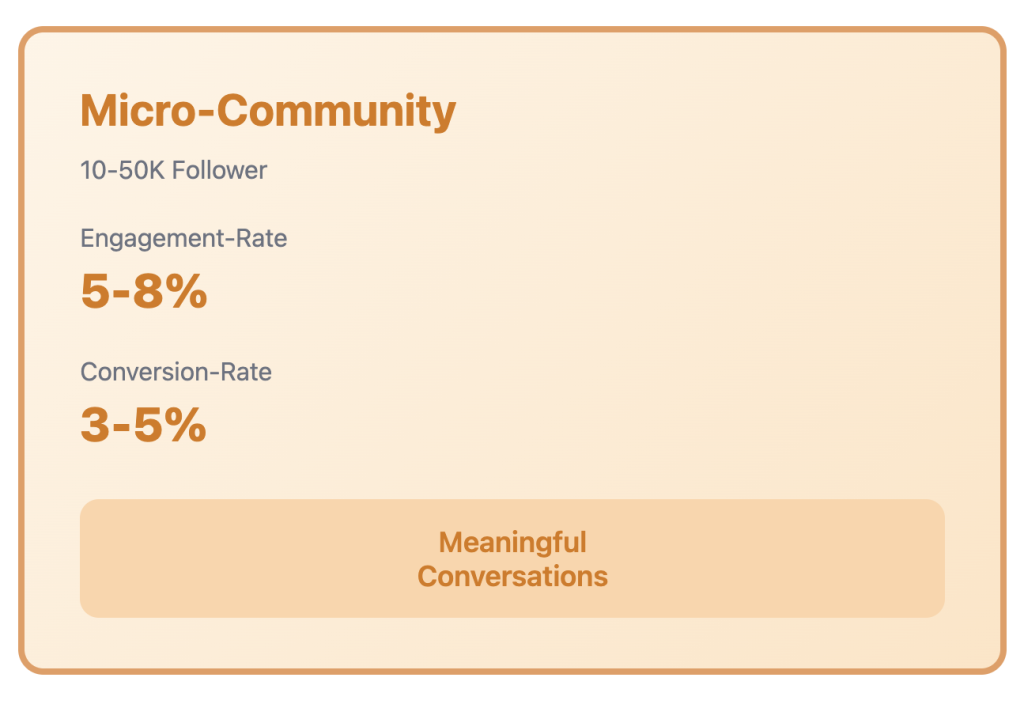
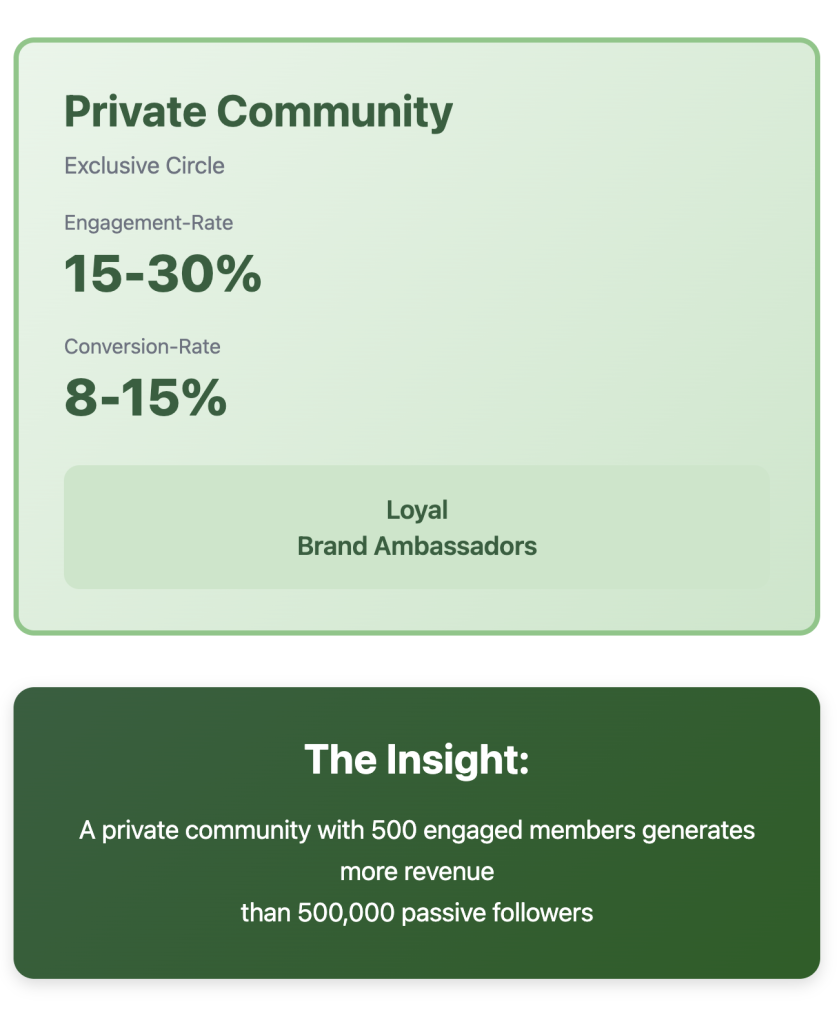
Why communities are winning
- Algorithm independence
Direct access to your audience without feed priorities. Push notifications for updates. - 5-10x higher engagement
Quality over quantity. Longer, more substantial discussions instead of fleeting likes. - Genuine feedback
Product testing with honest opinions. Feature requests directly from users. Early adopters for launches. - Organic brand ambassadors
Active members voluntarily recommend your brand to others. User-generated content as a marketing asset.
ROI: 5-10x higher engagement, 3-5x higher conversion rate from community vs. public feed.
Trend #6: Authenticity beats perfection
79% of consumers trust user-generated content and employee-generated content more than professional brand campaigns.
High-gloss brand video = 1.2% engagement
Mobile phone video by employees = 5.8% engagement
Customer review video = 7.2% engagement
Behind-the-scenes = 6.5% engagement
Why authenticity wins
- Content fatigue: Users are tired of synthetic perfection. Gen Z is reducing social media use due to overload. Real moments stand out.
- Trust crisis: AI-generated content is everywhere. Users are looking for ‘real people’. Imperfect = human = trustworthy.
- Algorithm preference: Platforms push original content. Creators with authentic content get more reach.
Employee-Generated Content (EGC)
Employee content generates 8x more engagement than corporate content. Employee networks are often larger than company followers.
The 4-phase framework:
Phase 1: Identification – Who already has a social presence? Who shows interest? What expertise does each person bring to the table?
Phase 2: Enablement – Content training (optional), template library for inspiration, brand guidelines (dos and don’ts, but room for personality)
Phase 3: Amplification – Company account shares employee content, internal gamification (recognition, not pressure), spotlight features
Phase 4: Measurement – Reach from employee network, engagement rate EGC vs. corporate, leads/applications with attribution
Voluntariness + authenticity = success.
User-generated content (UGC) strategy
By 2026, user-generated content will no longer be optional, but essential. 79% of consumers trust authentic customer photos and videos more than professional brand campaigns. A strategic UGC strategy follows four phases:
Phase 1: Encourage
The first step is to actively motivate your community to create content. Launch hashtag campaigns such as #MyProductMoment or #MyMorningRoutine that are emotional and shareable. Organise challenges with incentives: reward the best submissions with products, discounts or exclusive access. Regularly feature real customers and their stories in customer spotlights. This shows others that their contributions are valued.
Phase 2: Curate
Once UGC is created, you need a system. Regularly collect relevant content via your hashtags, tags and DMs. Always obtain rights and contact creators via DM. Secure written confirmation for use. Organise collected content in a content library (e.g. Notion, Airtable or specialised tools such as TINT), categorised by product, campaign or format.
Phase 3: Utilise
Now UGC becomes a performance driver. Integrate UGC into your ads. These often perform better than professional brand content because they appear more authentic. Place testimonials with customer photos on your website, especially on the home page and in the checkout process. Enrich product pages with customer photos.
Phase 4: Reward
Loyalty comes from appreciation. Feature active creators regularly on your main account to create emotional bonds. Offer exclusive discounts to content creators as a thank you for their contributions. Create a special community status (e.g. ‘brand ambassador’, ‘VIP member’) that gives access to early releases or exclusive events.
Personal Branding on LinkedIn
In 2026, LinkedIn will reward real personalities rather than corporate accounts. The reason: people trust people, not logos. CEOs, founders and subject matter experts who post using their own profiles achieve many times the reach of a company page with identical content.
The CEO effect: CEO accounts generate 8x more reach than company pages. 90% of LinkedIn reach comes from personal profiles.
Content mix: 70% insights/industry knowledge, 20% personal/behind-the-scenes, 10% product-related
Posting frequency: 3-5 times per week
Format mix: 60% text posts, 30% carousels, 10% video
ROI: 8x higher engagement (EGC), 79% higher trust (UGC), significantly lower content production costs.
Trend #7: LinkedIn as B2B-Powerhouse
Growth figures:
- 24 million German users (+20% year-on-year))
- 8% of the German population uses LinkedIn weekly (and rising)
- 8x higher reach for personal profiles vs. company pages
- 90% of organic LinkedIn reach comes from personal profiles
Top content formats by performance:
- Carousels (7-10 slides)
Mini white papers, checklists, frameworks. Saved and shared. Ideal for complex B2B topics. - Personal stories
Behind the scenes, lessons learned, failures. More authentic than corporate speak. The CEO/founder perspective is particularly powerful. - Thought leadership posts
Contrary opinions, future theories. Trigger discussions in comments. Positioning as an industry expert. - Data posts
Own studies, surveys, benchmarks. Frequently cited and linked. Backlink magnets for your website. 5. Video (1-3 minutes)
Front camera, authentic, not overly polished. Direct eye contact has a strong effect. LinkedIn native upload.
The LinkedIn algorithm hack:
The first 60 minutes after publication determine the reach of the post. Engagement during this time (especially comments > likes > shares) triggers further distribution in the feed.
Tactic: Post at times when your target audience is online. Respond immediately to initial comments to stimulate discussion.
Quick win:
Managing directors or subject matter experts from your team will start posting personal content on LinkedIn this week. Three times a week, with a mix of insights, experiences and occasional personal content.
Tools:
- LinkedIn Analytics – Native insights, free of charge
- Shield Analytics – Deeper analytics, competitor tracking
- Taplio – Content scheduling + performance analytics
- Expandi – LinkedIn automation
ROI: 8x higher organic reach (staff), 3x higher lead conversion (lead gen forms).
Trend #8: Quality Reset – Post less, achieve more
The content fatigue crisis:
Gen Z is reducing its social media usage. Almost half are cutting back due to content overload and mental health concerns (Cropink 2025).
The new reality:
One meaningful post beats ten superficial posts every time.
The metric shift:
What used to count: follower growth, impressions, likes, post frequency.
What counts now: save rate (shows real value), watch time (time is the new currency), share rate (organic reach), engagement quality (depth of comments).
Content Audit Framework – The 4 filter questions:
- Would I save this myself?
If you don’t find it helpful, why should others? - Does it answer a specific question?
Vague ‘inspiration’ is no longer enough. Specific solutions win. - Is it better than the last 10 posts on the topic?
If not, why would anyone want to see it? - Would I put my name to it?
Do you stand behind the quality, or is it just filler?
If 2+ answers are ‘No’ → Do not post or revise thoroughly.
Quick win:
Conduct a content audit. Analyse your last 20 posts. Which top 5 had the most engagement? What do they have in common (format, topic, style)? Mentally eliminate the bottom 10 and learn from the patterns.
Tools:
- Notion / Airtable – Conduct structured content audits
- Later Analytics – Track post performance over time
- Sprout Social – Cross-platform analytics
- Native Platform Analytics – Often underestimated, but very accurate
ROI: Higher engagement rate with less production effort, less team burnout.
Trend #9: Creator Economy 2.0 – Micro beats mega
The shift from mass to relevance (see Trend #5) applies particularly to influencer marketing. Micro-creators with 10-100K followers significantly outperform mega-influencers.
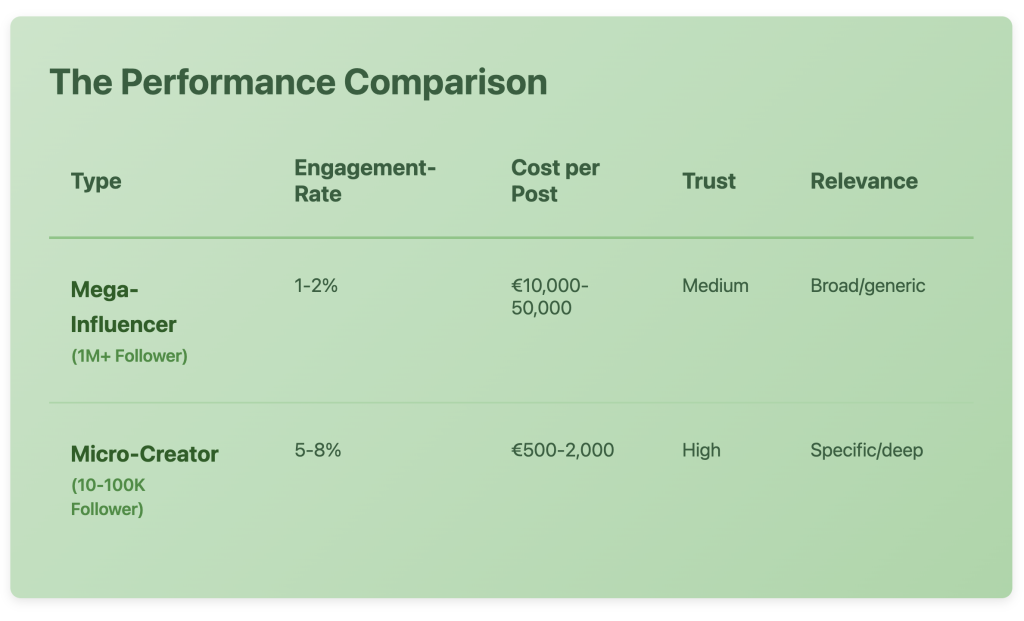
Why Micro-Creator wins:
- Higher engagement: The community knows the creator personally, feels connected, and actively interacts.
- Authenticity: Not perceived as ‘just advertising.’ Recommendations seem more honest.
- Niche expertise: Appeals to specific target groups. Less waste, higher conversion.
- Cost efficiency: 10 micro-creators = budget of 1 mega → but diversified reach and more authentic touch points.
The strategic shift:
Modern brands work with 10-15 micro-creators in parallel instead of one mega-influencer. The advantages: diversified reach, A/B testing of different messages, lower risk, more authentic brand message.
Employee advocacy as a creator strategy:
Use employees as authentic brand ambassadors (for details on the EGC framework, see Trend #6). The difference to classic corporate content: authentic stories from everyday working life instead of polished corporate PR.
Identify niche influencers:
Step 1: Define your niche precisely (not ‘fitness’ but ‘running for beginners over 40’).
Step 2: Search for relevant hashtags and trends in this niche.
Step 3: Analyse engagement rates, not just follower numbers.
Step 4: Check content quality and authenticity (real stories vs. only sponsored posts).
Quick win:
Identify 5-10 micro-creators in your specific niche. Start with product seeding (free products) or affiliate partnerships instead of expensive sponsored posts. Build long-term relationships.
Tools:
- Modash – Micro-Influencer Discovery & Analytics
- Upfluence – Influencer-Relationship-Management
- Tagger Media – Campaign-Management & ROI-Tracking
- AspireIQ – Creator-Marketplace with Reviews
ROI: 3-5x higher ROI compared to mega-influencers, more authentic brand perception, higher conversion rates.
Trend #10: Platform diversification
The average German user is active on five platforms. No one-size-fits-all strategy works anymore. Each platform fulfils a specific role in the lives of users.

The strategic insight:
Better to have two platforms done properly (with a dedicated team, consistent strategy, platform-specific content) than five done half-heartedly (same content everywhere, no community management, no platform-native features).
Platform-Selection-Framework:
Question 1: Where is your target audience actually active?
Not where you think, but where the data shows. Use platform analytics.
Question 2: Which platform suits your content format?
Visual product? Instagram/TikTok. Long-form expertise? YouTube/LinkedIn.
Question 3: Where can your resources be realistically deployed?
To use 2 platforms well requires 1-2 FTEs. 5 platforms? At least 3-4 FTEs.
Cross-Platform-Content-Strategy:
Not the same content on all platforms, but adapted content with platform-specific tweaks:
YouTube: 15-Min-Deep-Dive-Video
→ TikTok/Reels: 10 Shorts (beste moments, hooks)
→ LinkedIn: Thought Leadership Post with Video-Clip
→ Instagram: Community-discussions with Behind-the-Scenes
→ WhatsApp: Exclusive Bonus-Content for Channel-Subscriber
Quick win:
Use native platform analytics to analyse where your target audience actually spends time and interacts. Identify your top two platforms. Reduce or pause the others for 30 days. Invest the time you save in the top two.
# Hootsuite / Buffer – Cross-platform scheduling
# Sprout Social – Multi-platform analytics & reporting
# Later – Visual planning (Instagram-focused)
# Loomly – Brand success platform with calendar
# Native analytics – Often the most accurate for platform-specific insights
ROI: Greater efficiency through focus, significantly improved platform performance
Your next steps
Social media in 2026 is no longer a side game. The rules of the game have changed fundamentally. Communities beat mass, social search replaces Google, and on-platform conversion is the new standard.
The good news? You don’t have to implement everything at once. However, you need to be aware that there is no way around it.
Need support? We at Lookfamed are happy to advise you.
- Share
-

-

-

-

Author
Pia Dzimalle
Senior Marketing Manager


 Sign up
  Loading...


 Search...